top of page

Welcome to the family.
 

Our Story

KarmaFarm originally set out to offer a unique and laid-back retirement setting for the local equestrian community. Established in 2022, we have been constantly renovating our property to provide quality care and safety of a boarding facility while allowing animals to live the most natural life we can provide. We are so excited to share the experience of what we believe to be the perfect blend of comfort meets nature at KarmaFarm. 


We quickly found our niche as a special needs facility for less fortunate animals.  Our vision transformed into something even more meaningful as we began tailoring our facility to meet the individualized care needs for both our own companions and our private boarders as they arrived. We have found overwhelming joy and support being able to help them  live their best lives while managing their unique conditions and circumstances. We are honored to be surrounded by their helpful and compassionate owners and strive to make every day at the farm with their companions a fun and memorable one.

As time and projects flew... and our animal family grew, we began to meet more members of the local community and quickly came to understand the appreciation around us for what we were building. What started as a lifestyle we wanted to share with our children became a much bigger dream of helping those in need and sharing it with everyone around us.  
Explore KarmaFarm

To be the first to know about upcoming events, egg availability; boarding openings or watch our animals interact daily

Meet the Team

Our Facility

Hands-On Educational
Animal Meet & Greets

Available By Reservation Only

Personalized small farm fun

Immerse yourself in our heartwarming retirement farm for animals with special needs; where every animal has a story. This hands-on experience is fun & educational—giving visitors a deeper appreciation for animals that require a little extra compassion and the dedicated care that helps them thrive. Brush, feed and learn about each animal’s personality, special medical needs, daily care and our specially designed facility in an interactive setting. (Climate controlled area if needed)

Meet & Greet Scheduling:

We appreciate your contribution to our sustainability! KarmaFarm's proceeds go directly to caring for our special animals- from vets and farriers, maintaining safe fencing, shelters, quality diets, proper footing & reseeding pastures annually to help our furry & feathered friends live their best lives.


KarmaFarm prioritizes our animals well-being, safety and happiness. We reserve the right to withhold any animal that may not be feeling up to the task on any given day. Thank you for your respect and understanding in this matter. 


***$50 non-refundable deposit collected at time of booking. Deposit applied to final total due upon arrival. Cash, Paypal, Zelle or credit/debit accepted. 6% fee on Credit debit.***


Please note: If your transaction errors out mid booking, the booking timeslot will not appear available again for 10 minutes.


Visit our KarmaFarm (Hampshire,IL) Facebook page to follow along with our daily fun & shenanigans.


Questions before you book? Reach out to us at KarmaFarmHampshire@gmail.com

willow_edited.jpg

Boarding Accommodations

Welcome to KarmaFarm, where we provide personalized care for your horses. Whether you're looking for a low-key retirement home or a place for casual pleasure riding, we go above and beyond to ensure your horse's comfort and well-being. With the owner as the active care-giver living on site, you can rest assured that your horse is in dependable hands. We also keep you updated with frequent communication and posts about your horse's progress.

Current Boarding rate is $600/month and all inclusive to the details listed below:

Feeding:

*Free choice 24/7 quailty small bale grass hay
*All horses provided their own 100gal slow feed hay trough
*All 24/7 hay is served in shelters to protect from elements
*Owner provided grain/supplements is fed anytime; no additional cost.
*Horses fed grain/supplements individually  
*Clean water
*Heated troughs in winter

Housing:

  • 24/7 outdoor boarding

  • All horses have stalls for emergency needs

  • Horses remain gated in dry lot paddocks with 2 horses with best matched personalities of our herd at "turn in"

  • All horses provided spacious 2 horse shelter on dry lot

  • Multiple gated group and individual grass pastures- these also combine for one larger pasture

  • ((Note:  We do NOT provide regular individual turn out; but is available for an occasional stay for special needs)

  • Pasture turn out daily (weather permitting)

  • Mixed herd

  • Additional hay is served scattered safely to enjoy space while eating across pasture daily or horses brought in to lots for "hay breaks" as needed

Barn:

  • Clean, bright and organized

  • Insulated for winter; Isle fans, individual lights with fan in every stall 

  • One large tack box, saddle rack and bridle hook provided

  • Clean heated bathroom

  • Hot/Cold indoor wash rack with overhead waterproof heater, matted floor

  • 10x10 stalls; mats and shavings provided when in use

  • Stall dividers uniquely easily swing open; able to combine stalls as needed or open all walls to create larger indoor working space or pass through 

  • Large twist lock or grain bins provided to keep your grain fresh as needed

  • Guarded by friendly barn cats to keep pests out

  • Full size barn fridge
     

Other Amenities:

  • Holding for vet; farrier; applying fly spray; blankets ect no additional charge.

  • Secure wooden fencing

  • 3 Acre grass pasture

  • All paddocks have large, heated and grounded water troughs

  • Private small grass grazing run with tree swing for down time with your horse

  • Light occasional extra upkeep help for small issues that arise (hoof cleaning, keeping wounds clean/medicine applied) no additional charge.

  • Large Fenced outdoor sand arena 

  • 2 Jumps/poles

  • Public trails less than 5 minute walk down small road

  • Hay field/property riding 

  • Close to Fox Valley Saddle Assoc.

KarmaFarm's Personal
Companion Animals

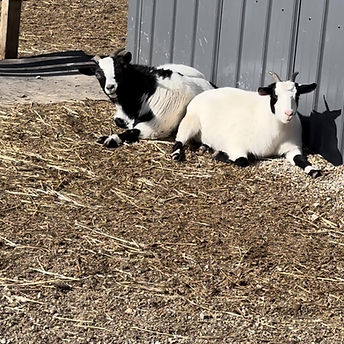
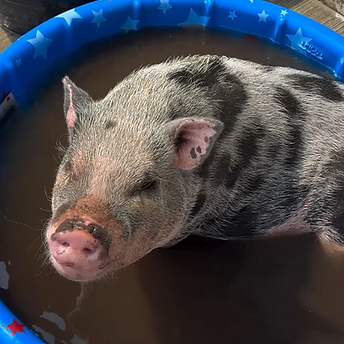
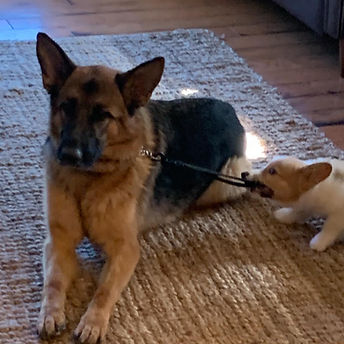
 Our farm is home to a variety of animals, from chickens and goats to horses and a pig. Come visit us and get to know our friendly companions up close and personal. 
 

KarmaFarm Shop

Farm Fresh eggs, goat milk lotions and other farm goods or customized items
Section under construction- check back soon!
Click below to visit our sister site Forever After Studio for custom apparel 

rs=w_1200,h_1200.webp

Contact Us

45W461 Kelley Rd
Hampshire, IL 60140

Click the like button
to find us
on Facebook

Thanks for submitting!

To Whom It May Concern,

I am writing regarding the proposed pipeline construction at the rear of my pasture at KarmaFarm, a special needs retirement private horse boarding facility- to clarify, the animals have special needs. Because this property houses both owned and boarded horses, cows, goats, donkeys, chickens, and pigs this situation involves not only land use considerations but also measurable animal health risks, safety liabilities, and business continuity concerns.

 KarmaFarm is in process of becoming an official animal sanctuary but currently operates solely on private funds. Our long-term goal is to join the Global Federation of Animal Sanctuaries, of which there are only 216 registered facilities in the world that have applied and met their extensive standards to be accredited. We are very close and continue to strive. Additionally, we offer one on one services for children and those of special needs to enjoy the peaceful nature of the community that we have created here. KarmaFarm does not operate as a traditional boarding facility. There are less than a handful of horses on site that are capable of being ridden, and even those have restrictions on workload. Unlike most retirement facilities where owners rarely visit, every one of our owners is an active part of our community and find therapy in being present at the farm to visit all of the animals.

Each of the animals plays a role in our ecosystem.  Cows and goats maintain the weed population to ensure the horses are not ingesting weeds that would be toxic to them. Donkeys serve as a natural predator protection for our herd. Especially for our flock of chickens as we have a high coyote population. Our pigs are moved and used in preparing gardens and to naturally upturn soil in areas of excessive compaction. This helps us repair the area without machinery. Chickens safely and naturally till and help fertilize our pasture. The chickens produce 6-8 dozen eggs daily and serve as our main attraction to our farm store and additional income. They also are nature’s best fly control. Flys present high risk to spread common equine diseases. We also have horses with severe allergies to fly bites. Our horse manure must be composted for a year prior to use. We rotate our manure pile often to compost and prepare it as fertilizer for the next winters spread over our pasture. During construction the chickens will have to be in an enclosed run- this hurts their social well-being and will slow production. It also removes them from fertilizing our horse pasture and eliminating flies and worm larvae from feces that could infect the horses. We will no longer be able to let them enjoy the pasture, likely for the entire grass season, due to overgrazing. With 200 chickens, we need our entire pasture for them to maintain the proud standard of them being pasture raised for the added nutrition to the eggs, cost savings on feed, their emotional well-being and the business advertising standard, all of which we strive to uphold.


We understand and appreciate the offer of compensation for relocation of the animals in our care. After discussing the option with our boarders, we have had one already relocate. The remaining expressed fear to leave KarmaFarm’s extensive care. The boarders fear even if they did leave, no other facility would be able to provide for their animals in a similar way. Nor may they even survive the risk of trailering or moving facilities in general due to current health conditions. Making it through a facility change for old or immune comprised horses is only the beginning. Once introduced to a new herd, there are typically months of painful adjustment periods, from being injured by other horses to stress-related cortisol spikes and changes in diet that could easily and ultimately lead to loss of life. They would once again have to take these risks in making a choice to return to KarmaFarm after construction. These owners all came to Karmafarm because they have experienced many barns with consistent issues receiving proper turnout, adequate food or water, or receiving their medications properly. This is a common deep-rooted issue in the equine industry as a whole. They have all suffered physically and emotionally. We are very proud to offer a safe space for both animal and owner to find comfort again.
 

We have evaluated the safety risks that the upcoming construction brings to each individual animal in our care versus different viable options of controlled containment or temporary relocation.  Horses being of highest priority as they are already at high risk without construction and at the most risk of physical and psychological harm during construction. Horses are prey animals; they rely on fight or flight instinct and are extremely aware of any subtle changes in their surroundings. To be specific – even the small flags Nicor has placed in the neighbor’s property were deemed a “threat” by our herd that caused stress and refusal to go near that area of the property for several days. Our barn is not only incapable of holding all of our animals to shelter them from construction disturbances, but almost every single horse has an extreme circumstance that prevents them from being stalled other than short-term medical needs, vet or farrier visits. Moving our horses to a different portion of the property is not a viable option for us. The remaining property available is in front of our home, next to a roadway. We often have high speed vehicles that could easily startle horses and risk fights or flight instinct injuries. This placement would greatly increase potential of an animal ending up on a roadway- a serious liability. Additionally, it is also a high concern for our many horses with respiratory diseases and metabolic disorders as our lawn is completely different richer grass than our pasture.

 We are willing and able to relocate some of our animals that may be able to handle the change to accommodate for loss of grazing and soft turn out space for exercising the horses. This would require proper fencing adequate to withstand a cow, a bull and goats. This would have to be sturdy three rail with heavy wiring and tall enough that a goat cannot easily climb or jump, which, for ours, is around 5 feet. As we have five children of our own, that would mean losing access to almost the entire property. We do not condone the use of hotwire as this is high risk for our toddlers and visitors, especially those with special needs. We also fear relocating those animals will not alleviate enough stress from the pasture to make it sustainable.
 

Below is a comprehensive outline of the of different special needs that KarmaFarm has spent years and hundreds of thousands of personal dollars individually tailoring our facility to meet each horse’s specific health needs as they arrive. Included are descriptions of our horse’s disorders, their health effects on horses and the safety measures necessary to protect the animals with these conditions. Below you will find a condensed version of each medical condition. The end of this document includes a detailed description of each condition and their medical needs for reference. We have also attached letters of concern our boarders have asked of to submit on their behalf.


Current Medical Conditions. Please note some horses have multiple conflicting conditions.

Lung Cancer (1)

Asthma (1)

Heaves (1)

Cushing’s (3)

Myosin Heavy Chain Myopathy (lameness induced by improper sugar/diet) (1)

Injury induced Myopathy (1)

Permanent soft tissue/ligament Shoulder lameness (2)

Metabolic Risk (1)

Kissing Spine (1)

Severe sleep deprivation/Narcolepsy (3)

Colic Prone(2)

Pemphigus (Autoimmune) (1)

Severe Fly/bug bite allergies (2)

Chronic Proliferative Pododermatitis (Hoof Canker) (1)

Persistent sulcus thrush (hoof) (1)

Stress related trauma from abuse (Amish bred work horses) (3)

Fecal water syndrome (2)

Chronic Desmitis (Permanent Suspensory ligament damage) (1)

White line disease (hoof)  (2)

Arthritis – (9)

Age of 25 or older (senior) (9)

Ulcers (often recurring for any horse given medication for its issues)


Special accommodations KarmaFarm has put in place:

The entire barn floor has been altered to all concrete flooring. All walls upgraded to fiberglass reinforced plastic. This allows for a full barn power wash weekly to eliminate dust and allergens commonly found in barns from dirt, shavings and hay. Horses with extreme respiratory conditions can safely enter our barn for vet and farrier work. This also comes with a price of not being able to keep anyone stalled on concrete for extended periods. We have also made special accommodation unique to our barn by creating foldable stall divider walls. This allows us to safely and easily combine all stalls into one large run to help alleviate some of the stress associated with traditional stalling and allow horses continued movement when medical stalling is deemed necessary.  This has not been a hindrance to us as all of our horses’ conditions require constant, controlled movement as one of the best possible tools to provide healing and recovery. Instead, we have built every horse its own outdoor shelter.  Because every horse has its own shelter, we have been able to provide easy access to hide from the elements, which they are already extra sensitive to with their conditions. Individual shelters limit concern of fighting or weaker horses losing access to shelter. Most barns provide a very inadequate shelter vs animal ratio.

Horses with colic do best on grass with moisture and require constant movement to keep the gut active. Horses with arthritis must actively be moving in a low impact setting, avoiding stalling or long periods on hard surfaces. Our dry lots were created to have a flat surface free of mud and strained walking conditions to help animals with arthritis, soft tissue damage, kissing spine, recurring hoof bacterial conditions and metabolic horses with grass sensitivity. We have several horses with multiple conflicting conditions. Where most barns add dry lots as a luxury, for us it is necessity. This also requires us to provide a soft surface for the horses to exercise daily with relief from the hard dry lots. We must also vigilantly manage our pasture turn-out in a controlled manner maintaining it to the correct height for grazing to provide nutrition and control present metabolic disorders. Stressed or lush grass must be avoided. Incorrect pasture management increases sugar to dangerous levels where horses with metabolic conditions can no longer be allowed access to it.  With the installation of our dry lots for medical purposes, we recently experienced a toll on our reserve rotational pasture turnout due to the amount of impermeable material on property.  We were forced to sacrifice one of our pastures to create a large berm to reduce stormwater run-off toward our neighbors. With the additional reduction created by the upcoming construction we will be down to approximately 1/3 of the total pasture space we were able to utilize in previous years.

Every horse has been individually matched with its best suited paddock buddy to induce the least amount of social stress. Horses are socially dependent on having at least one “trusted friend” to look out for them in the evening. Not having a proper companion disrupts their REM sleep pattern. We have three horses that came to us with sleep deprivation issues. We actively monitor them with the internet and camera systems we have installed in the barn and paddocks. Disturbances or change in herd have severe effects on their routine sleep patterns for months. This leads to dangerous collapses for the horses and the people around them. We have actively changed paddock mates according to our findings, added sand bedding in specific areas where the horses often ritually stand to help encourage sleep and eliminate fall wounds or REM disturbance induced seizure episodes. Additionally, we have installed secondary fencing around areas at risk of being broken during a collapse risking containment issue for the herd. These horses with sleep disturbances sleep best in the comfort of the softer grass pasture during the daytime near the proposed construction site. We have actively done everything in accommodating boarders to maintain the least amount of turnover of clients. This ensures the herd remains steady to eliminate as much change in the dynamic as possible as this leads to a chain of events causing harm and distress to the herd.

The consistent routine and tranquility we have worked to instill alleviates the stress for our hyper-sensitive horses. This includes previously abused working horses, who can and will easily break through or attempt to jump fences when startled, as well as colic prone horses and metabolic horses that get dangerously elevated cortisol levels if stressed. It also eliminates horses with soft tissue, ligament issues or arthritis from spooking and further injuring themselves.

The other animals are also used as calming buddies if a horse needs to be stalled without having to sacrifice another horse as a companion to stall. We have installed electricity for each of 8 different paddocks and our pasture to maintain tank warming heaters for all horses during the colder months and fans in each shelter during the hot ones. We have also installed a hot water system with both indoor and outdoor accessibility for medical and bathing use. Our water tanks are all grounded to avoid electric discharge commonly associated with tank heaters that deter horses from drinking and scrubbed clean weekly. These are also uncommon to find in an equine facility, unless you are able to pay thousands of dollars a month for board alone.

Every horse on property has been given its own individual 100-gallon hay trough that fits 2 quality checked small square bales with a slow feed net. These are routinely dumped and cleaned of dust weekly. This keeps horses from inhaling unnecessary, dust, fighting for food and helps maintain weight on our “hard keepers”. Horses must have access to constant forage. More than 4 hours without food causes a high risk of ulcers in horses. This is again hard to find in the equine world. Either there are typically two daily feedings, or hay provided all day via large round bale for cost efficiency. Round bales are most often of much poorer nutritional quality of hay, harder for seniors to digest and carry a high risk of dust and mold, dangerous to even healthy horses. Our horses are often, if not always, on medications and supplements; highly increasing the risk of ulcers. Additional medications for calming purposes are actively avoided as much as possible as they cause dehydration, colic risk, and high risk of kidney or liver failure. These are already a high risk for older horses, especially those already on consistent medications.

I hope this letter serves as an understanding to the painstaking dedication that we have taken in delicately managing every life on this property. Our facility is as close as you can get to a long-term hospital stay with the comforts a horse requires physically and mentally. We have done everything in our power to provide a facility that offers help and affordability to those with wonderful special needs animals that would be otherwise unable to find the care needed. We have exhausted our resources to make any larger dramatic shifts to our facility.  With the overwhelming amount of daily routine care in every aspect and conflicting medical needs for each individual animal, we are desperately requesting assistance in creating a new arrangement able to help us maintain the animals in our care without serious risk of injury, illness or loss of life.

There is no simple solution to managing what we are dealing with daily vs construction. Our barn, as a whole, is requesting preventative assistance prior to construction to build an enclosed turnout arena with dust control additive and sound barrier paneling over our current outdoor sand arena. This will provide a controlled space to keep our delicate herd shielded from the stress of visual environmental change, dust, exhaust, noise pollution, and the metabolic dangers of overgrazed pasture stress while maintaining an open, soft impact area for them to continue light exercise with minimal effects on their overall health. This will also provide us space to continue to work with special needs guests. While we do not anticipate this fully solving all our concerns, it is the only viable solution we have been able to conclude providing the best possible protection from the issue at hand. Constructing the building will still result in stress, but far less than the pipeline disturbance. Our ability to move the herd or administer calming medications for a few days of construction is a much easier and a less risky task than managing it for what we can only assume may end up being months between our property and the neighboring properties. 

We understand that we are already bound to a Nicor easement. We do not view Nicor as the enemy and know either way this project must happen. We are simply evaluating the fact that either way this project will also have severe consequences for our animals, business and property. We are not looking for, nor interested in a world-class riding arena as we cannot ride almost any of the horses. It has never been a priority for us. What has always been a priority is to ensure their safety a step ahead rather than to deal with highly foreseeable consequences. The risk analysis for a healthy herd of horses still shows the likelihood of several costly medical reparations. The risk of injury and potential loss of life, loss of business, loss of reputation, having to reformat our facility again to meet new horses needs should we lose anyone by any manner, adding new fencing arrangements to relocate animals to avoid pasture stress, risks of housing animals near a roadway, adding new dry lot arrangements to move animals again without creating mud and destroying our lawn, loss of space for our children, additional shelters to be built to move cows and goats, additional permitting, repairing pastures, loss of egg income, a new predator proof containment of our chickens, loss of pasture incurring higher cost of feed, and loss of our tended natural fertilizer manure pile, are among several of the issues we have taken in to consideration in making this alternative request that we find equivalent to the cost of the proposed preventative measure we are requesting.

We understand that this is a partnership and appreciate Nicor’s consideration to our animals, business and property. We believe this is the most mutually beneficial arrangement based on our knowledge and research. We request all appropriate safety measures in place before construction begins in the containment area presented in documented form, along with release forms and a COI naming KarmaFarm as additionally insured.

We additionally request in documented form that Nicor pays for any necessary temporary safety fencing at the area of construction, reparation of the previously existing fencing and for any pasture area directly affected by the upcoming construction. We ask this document also contains a strategic outline of all legally required necessary safety measures for standard business and livestock practices and additionally includes following:

  • Dust control measures

  • A proposed timeline of construction on our property and surrounding properties

  • No trash of any form left on construction site

  • An agreed upon schedule of daily work hours

  • Contact information for crew lead

  • Crew lead has property owners’ information to contact immediately for emergent situations

  • An end of day site walk including crew lead and property owner

  • Nicor employees refraining access to any portion of property not associated with the outlined and approved construction site without preapproval from property owner

  • No livestock or gates shall be tampered with by Nicor employees

  •  Immediate containment and notification to the property owner of fuel or hydraulic spills

  • A guarantee of the completed pasture restoration work in the construction area for 3 years.

  • No open trenches left accessible to horses

  • Acknowledge of our active special needs animal boarding operations in writing.
     

Thank you for your time, cooperation and consideration,

Ken & Melissa Blatz
KarmaFarm

Lung Cancer:

Managing a horse with lung cancer requires a careful balance between providing enough gentle movement to maintain muscle tone and strict environmental control to prevent further respiratory distress. 

Environmental Management

The primary goal is to eliminate inhaled irritants like dust, mold, and ammonia that can compromise already damaged lung tissue. 
 

  • Turnout is Priority: Maximizing time outdoors in fresh air is the most effective way to improve lung function.

  • Stall Hygiene: If stabled, use dust-free bedding like shredded paper, wood pellets, or cardboard instead of straw. Remove the horse from the barn during cleaning and for at least an hour afterward to let dust settle.

  • Forage Control: Dry hay is a major source of mold and dust. Use a high-temperature steamer (at least 200°F) or soak hay completely in water for 15-30 minutes before feeding.

  • Feeding Position: Feed from the ground or a low tray rather than a hay net. This allows the horse to naturally drain mucus and debris from their airways. 

Exercise Guidelines

Exercise should be tailored strictly to the horse's individual energy levels and respiratory capacity. 

  • Low-Intensity Movement: Gentle exercise, such as light walking or hand-grazing, is beneficial for muscle tone and mental health.

  • Avoid Overexertion: High-intensity activities like galloping or rapid acceleration can spike lung blood pressure and cause severe distress.

  • Monitor Recovery Time: A key indicator of whether an exercise was too hard is how long it takes for the horse to return to a resting respiratory rate (normal is 8–14 breaths per minute).

    • Under 15 minutes: Adequate workload.

    • 15–30 minutes: Challenging but likely acceptable.

    • Over 30 minutes: The exercise was too strenuous and should be scaled back.

  • Watch Air Quality: Limit all exercise in poor air quality, as horses with underlying lung disease are more sensitive to pollution

bottom of page